Archives
-
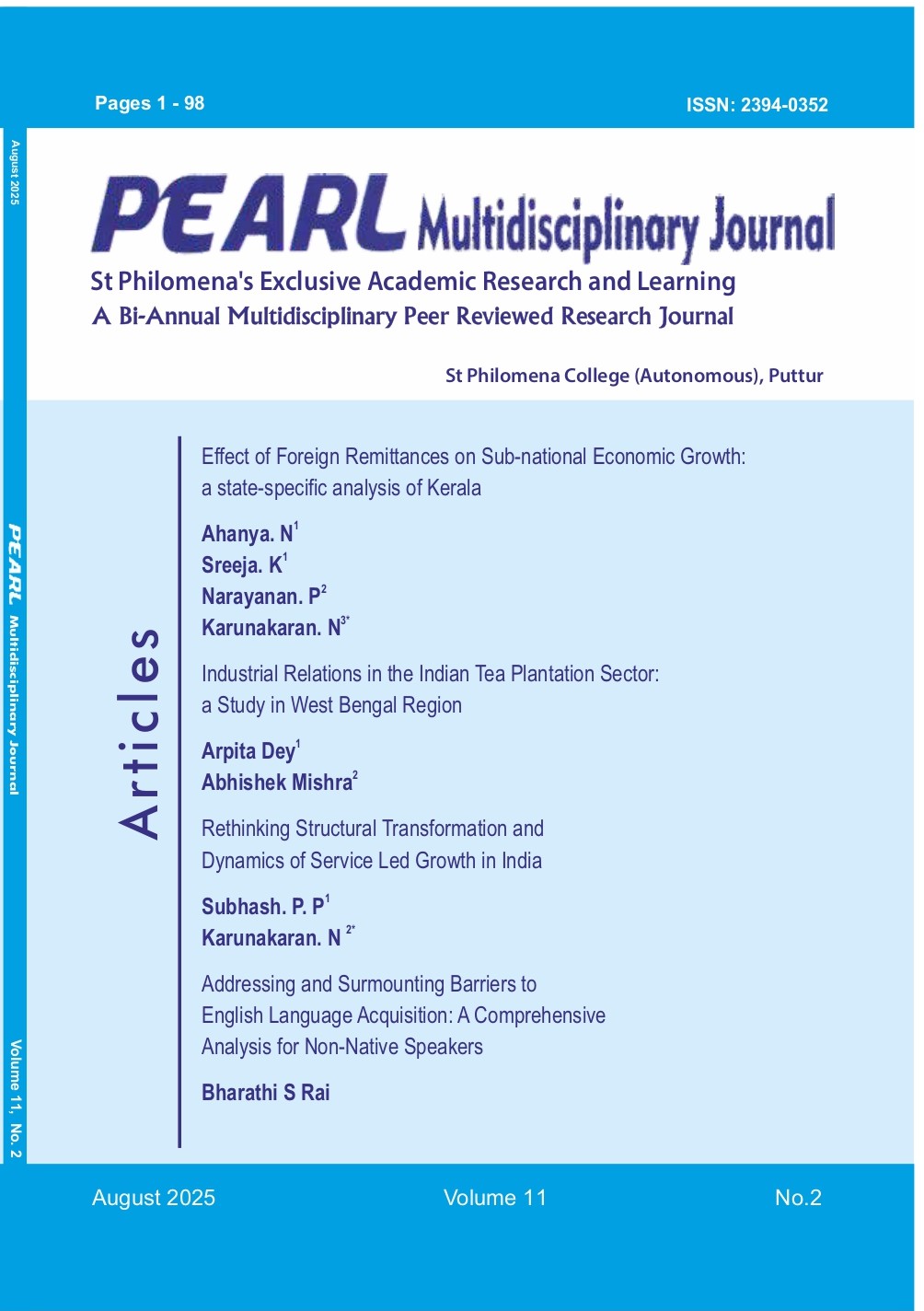
Volume 11, Issue 2 (December 2025)
Vol. 11 No. 02 (2025)Issue Description
This journal issue brings together scholarly contributions that examine key socio-economic and developmental challenges within the Indian context, with a particular emphasis on regional growth dynamics, labor relations, structural transformation, and educational advancement. The articles collectively highlight how economic structures, institutional frameworks, and social factors influence development outcomes across different sectors and regions of India.
The first article, “Effect of Foreign Remittances on Sub-national Economic Growth: A State-specific Analysis of Kerala,” explores the significant role of international remittances in shaping regional economic performance. By focusing on Kerala, a state historically dependent on migrant remittances, the study evaluates how inflows of foreign earnings contribute to income generation, investment patterns, and broader economic growth at the sub-national level.
The second article, “Industrial Relations in the Indian Tea Plantation Sector: A Study in the West Bengal Region,” examines the dynamics between employers, workers, and labor institutions within one of India’s traditional plantation industries. The study provides insights into labor conditions, collective bargaining practices, and policy implications for improving industrial harmony and worker welfare in the tea plantation sector.
The third contribution, “Rethinking Structural Transformation and Dynamics of Service-Led Growth in India,” revisits the evolving pattern of India’s economic transformation. The paper critically analyzes the increasing dominance of the service sector and its implications for employment generation, productivity growth, and long-term development strategies in a rapidly changing economic landscape.
The final article, “Addressing and Surmounting Barriers to English Language Acquisition: A Comprehensive Analysis for Non-Native Speakers,” focuses on educational development and linguistic accessibility. It identifies the structural, psychological, and pedagogical challenges faced by non-native English learners and proposes strategies to improve language acquisition and communication competence in diverse learning environments.
Together, these articles contribute to a deeper understanding of India’s development trajectory by examining economic growth, labor relations, structural economic shifts, and educational barriers. The issue aims to stimulate further research and policy discussion on inclusive and sustainable development across sectors and regions.
-

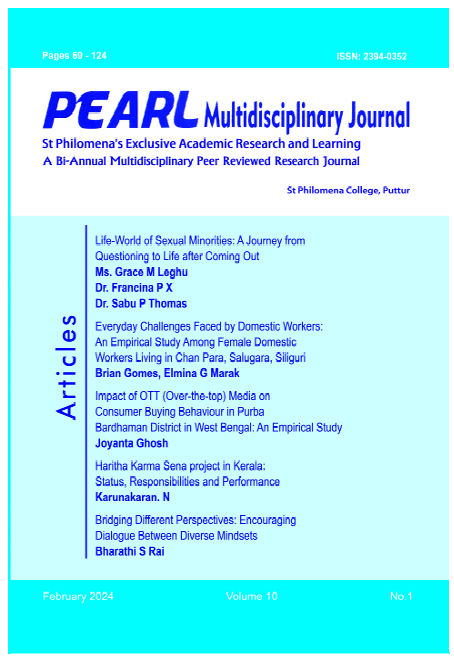
Volume 11, Issue 1 (February 2025)
Vol. 11 No. 1 (2025)PEARL Multidisciplinary Journal, Volume 11, Number 1 (February 2025), published by St Philomena College (Autonomous), Puttur, presents a collection of peer-reviewed research articles reflecting contemporary concerns and scholarly inquiries across the social sciences and allied disciplines. This bi-annual issue brings together empirical and exploratory studies that address psychological well-being, education, digital inclusion, leadership, creativity, and caregiving within diverse Indian socio-cultural contexts.
The issue features studies on parents as informal caregivers of children with intellectual developmental disorders, emotional intelligence and leadership skills among indigenous adolescents, gender dimensions of digital access and smartphone use, and the psychological and academic impact of smartphone addiction on young adults. It also includes a correlational analysis exploring creativity and temperament among youth. Collectively, these contributions offer valuable insights for researchers, educators, practitioners, and policymakers, and underscore the journal’s commitment to interdisciplinary scholarship and socially relevant research.
-
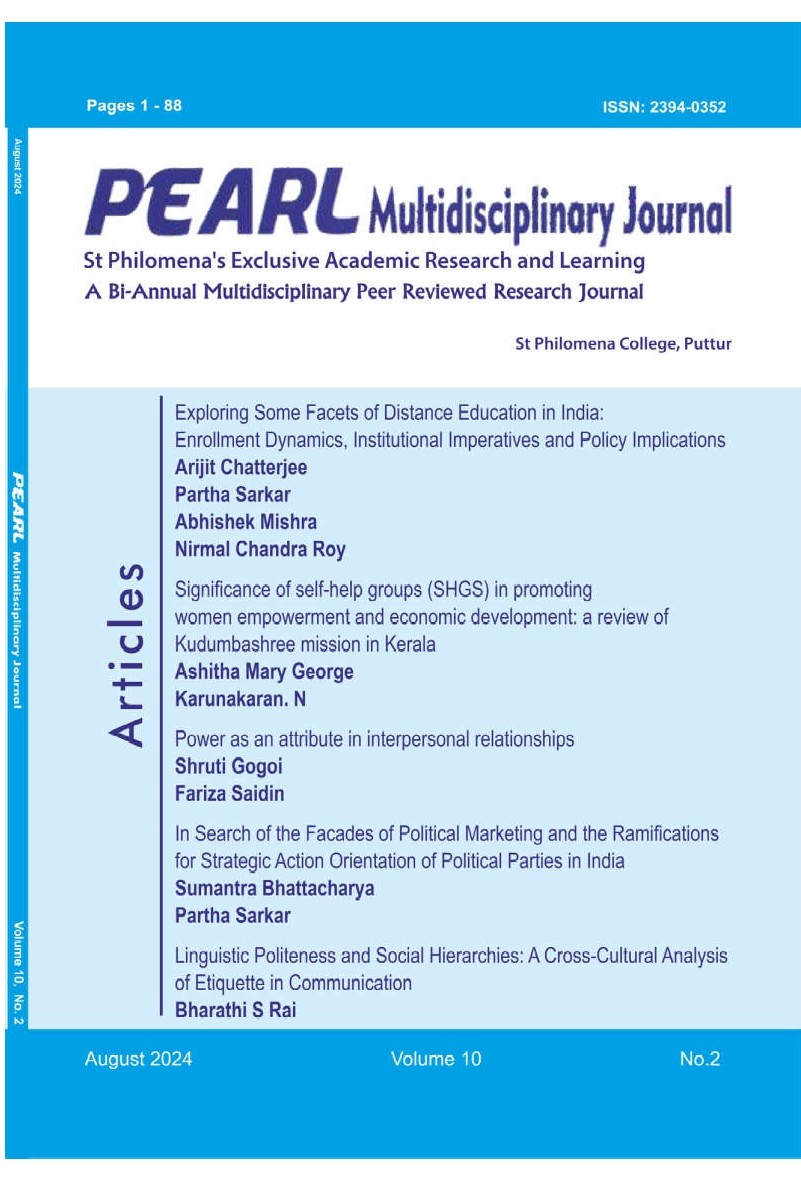
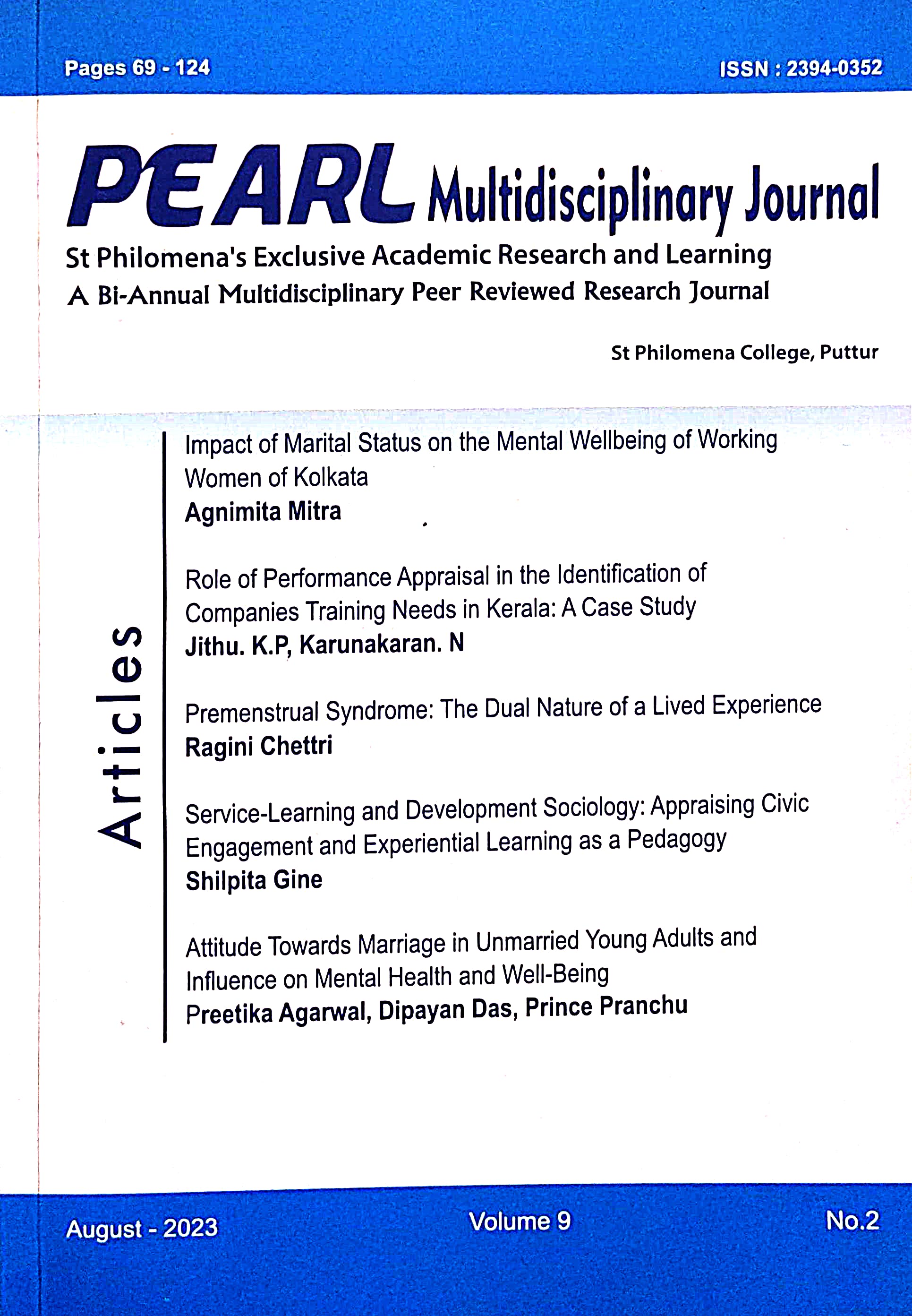
Volume 10, Issue 2 (August 2024)
Vol. 10 No. 2 (2024)Volume 10, Number 2 (August 2025) presents a collection of scholarly articles that engage with contemporary social, educational, political, and communicative concerns in the Indian context. This bi-annual issue brings together conceptual, analytical, and review-based contributions that reflect interdisciplinary perspectives across the social sciences.
The issue features studies on distance education and policy implications, the role of Self-Help Groups in women empowerment through the Kudumbashree Mission, interpersonal power dynamics, political marketing strategies in India, and cross-cultural dimensions of linguistic politeness and social hierarchy. Collectively, these articles offer critical insights for academics, researchers, educators, and policymakers, reaffirming the journal’s commitment to socially relevant and multidisciplinary scholarship.